

Your eyesight is key to keeping yourself and other road users safe, especially when driving larger vehicles such as motorhomes and campervans. That’s why it’s vital that you meet the minimum legal eyesight requirements each time you drive, as failing to do so could result in a fine of up to £1000, at least three penalty points on your licence and even an immediate revocation of your licence.
Read on to learn more about the DVLA’s eyesight requirements, when you need to notify them about your vision, and what you can do to ensure you remain safe and legal on the road.
For the most accurate and up-to-date information on eyesight requirements and reportable medical conditions, visit the DVLA’s health conditions list here.
Do I Need to Inform the DVLA That I Wear Glasses or Corrective Lenses?
This question is slightly more complex than it’s often made out to be. You are not legally required to inform the DVLA simply because you wear glasses or contact lenses to drive, however, if through the process of getting your driving license, renewing it or completing a DVLA mandated medical exam or eye test you are asked about your eyesight, you should be upfront and honest about any vision correction that you need.
If you started wearing glasses after you passed your driving test, and your eyesight fully meets the legal driving standards with them on, you do not need to notify the DVLA that you now wear them either.
However, if you develop an eyesight condition that affects your ability to meet the minimum eyesight requirements, then you must inform the DVLA and stop driving until you have been assessed and confirmed as fit to drive.
What Are the DVLA Eyesight Requirements?
The DVLA eyesight requirements vary depending on the type of vehicle you drive.
For vehicles under 3.5 tonnes, the requirements are:
- The ability to read a number plate from 20 metres (about five car lengths).
- A visual acuity of at least 0.5 decimal (6/12) in both eyes. This means that you can see at 6 metres what a person with standard vision can see at 12 metres.
- No double vision.
- A normal field of vision in at least one eye.
However, if you drive a motorhome, campervan or vehicle over 3.5 tonnes, the requirements are slightly different:
- You must still be able to read a number plate from 20 metres.
- You must have a visual acuity of at least 0.8 decimal (6/7.5) in your best eye, meaning you can see at 6 metres what a person with standard vision can see at 7.5 metres, and at least 0.1 decimal (6/60) in your other eye, meaning you can see at 6 metres what a person with standard vision can see at 60 metres.
- No double vision.
- A normal field of vision in at least one eye.
All visual acuity measurements are based on the Snellen scale. If you can meet these standards, whether with or without corrective lenses, you can legally drive on UK roads.
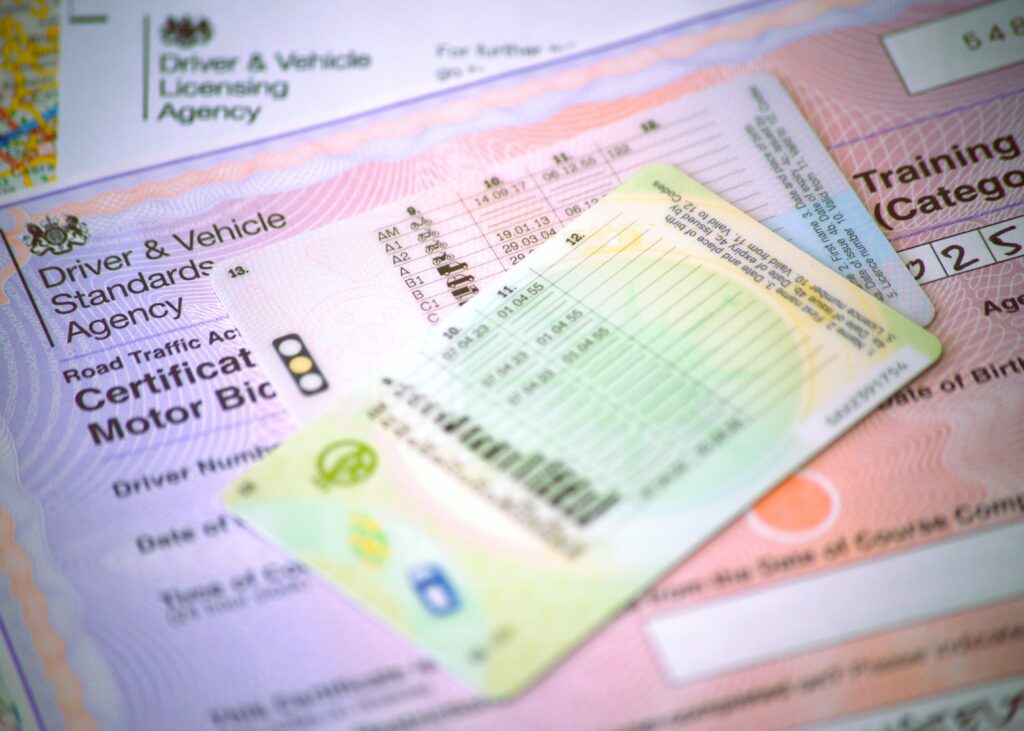
Image Source: Milosz Kubiak – Adobe Stock
How Does the DVLA Know I Need Glasses or Contact Lenses?
You may have noticed that there are numerical codes on the back of your licence under section 12. If the DVLA is aware that you need corrective lenses for driving, this will carry an 01 code on the back of your driving licence. This may also be written as 01.01 (glasses) 01.02 (contact lenses), or 01.06 (glasses or contact lenses). If the DVLA is unaware that you need corrective lenses when driving, this code will not appear.
What if I Wear Glasses or Contact Lenses but the DVLA is Not Aware?
Even if the DVLA is unaware that you need corrective lenses, you still need to make sure that you always meet the legal sight requirements when driving. This means that you must wear your glasses or contact lenses every time you drive or operate a vehicle.
What Happens If I’m Not Able to Meet the Sight Requirements When Driving?
Every driver is responsible for ensuring they meet the minimum legal eyesight requirements to drive. If you are involved in an accident where poor eyesight was a factor or are stopped by a police officer and fail a roadside sight test, this could lead to an immediate revocation of your license, a minimum of 3 points, up to a £1000 fine and even potential prosecution.
How Often Should I Get My Eyes Tested?
It’s recommended that you have your eyesight checked by an optometrist at least every two years, even if you do not currently wear glasses. Though if you notice any changes to your vision between routine appointments, you should book an eye test as soon as possible.
In addition to regular eye tests, you should also check that you can still read a vehicle number plate from 20 metres away every six months, as this can help you identify any changes to your vision early and ensure you are still legally fit to drive.
What if I No Longer Need Glasses or Contact Lenses to Drive?
If you no longer need glasses or contact lenses, due to laser eye surgery for example, your next steps are dependent on what is stated on your driving licence. If your driving licence doesn’t indicate that you need glasses or contact lenses to drive, then you don’t need to do anything.
However, if your licence has an 01 code on the back and you no longer need corrective lenses, you should contact the DVLA to let them know and get your licence updated, as this could cause issues if you are ever involved in an accident or pulled over.
Time to See the World with Comfort
Once your vision is 20/20, you’ll also need to make sure that you have the right insurance in place before hitting the roads. With our Aviva underwritten motorhome and campervan insurance policies, you’ll be able to drive with confidence, knowing you’re covered by one of the most comprehensive policies on the market.
If you’d like to get a quote for your home on wheels, you can give us a call on 0208 984 0666 and speak to a member of our knowledgeable and friendly team, who can help you find the right cover at the best possible price. Or if you prefer, you can also get a quick, easy and hassle-free quote online through our website.
Featured Image Source: Simona – Adobe Stock