
If you’re planning a motorhome or campervan road trip to Scotland or Wales, it’s important to understand how visitor levies (commonly known as tourist taxes), could affect your travel costs. These overnight charges are now being introduced in parts of Scotland and Wales, with more local councils expected to follow in the future.
Whether you’re touring on a budget or planning a longer road trip, knowing where visitor levies apply can help you avoid unexpected costs. As the locations and charges are subject to change, it’s worth checking the latest information before you travel.
In this guide, we’ll explain what visitor levies are, where they currently apply in Scotland and Wales, how much they cost, and what they mean for your next motorhome or campervan trip.
Index:
- Visitor Levy Rates in Scotland & Wales (Costs & Locations)
- Do Motorhome and Campervan Travellers Have to Pay?
- Accommodation Affected by Visitor Levies
- What Is a Visitor Levy (Tourist Tax)?
- Where Are Visitor Levies in Place in the UK?
- Why are Levies Being Introduced?
- Who has to Pay the Levy?
- FAQs on UK Levies
- Get a quote for Motorhome & Campervan Insurance
Visitor Levy Rates in Scotland and Wales (Costs & Locations)
Levies in Scotland
| Location | Start Date | Charge |
| Edinburgh | 24 July 2026 | 5% of accommodation cost (maximum 5 nights) |
| Glasgow | 2027 | 5% |
| Aberdeen | 1 April 2027 | 7% |
| Stirling | 14 June 2027 | 3% |
| West Dunbartonshire | 1 July 2027 | 5% |
Levy in Wales
| Location | Start Date | Charge |
| Cardiff | 1 April 2027 | 75p per person per night for shared rooms in hostels, bunkhouses, bothies or dormitories; and pitches for tents.
£1.30 per person per night for all other accommodation (including motorhome & campervan pitches.) |
Other areas, including some Scottish and Welsh councils are currently consulting on visitor levies, and may introduce schemes in the future. If you are planning a motorhome or campervan holiday, it is worth checking whether your chosen destination has a visitor levy in place so you can plan for any additional costs before you travel.
Levy Costs Explained
Unlike many countries where tourist taxes are charged as a fixed amount per night, Scotland’s approved visitor levies are currently based on a percentage of the accommodation cost, although legislation now allows councils to switch to fixed-rate charges in the future.
In Wales, councils introducing a visitor levy will charge a fixed amount per person, per night, with different rates depending on the type of accommodation.
As each local authority sets its own scheme, charges can vary depending on where you stay.
Accommodation providers will have the option to absorb the cost and pay it themselves or pass this charge onto customers. Levy costs must be included into the upfront pricing for accommodation if a customer is to pay it.
An Example of How Costs Work:
If you’re planning a motorhome getaway in Scotland and stay at a campsite in Edinburgh for 5 nights at an originally priced rate of £40 per night, a 5% visitor levy would add £2 per night to your bill. This would increase the cost to £42 per night, meaning your 5 night stay would cost an additional £10 in total.
Unlike hotel or B&B guests, many motorhome owners stay across multiple locations during a trip. So, if you’re staying on multiple sites, checking visitor levies before booking can help you budget more accurately and avoid small costs adding up over a longer tour.
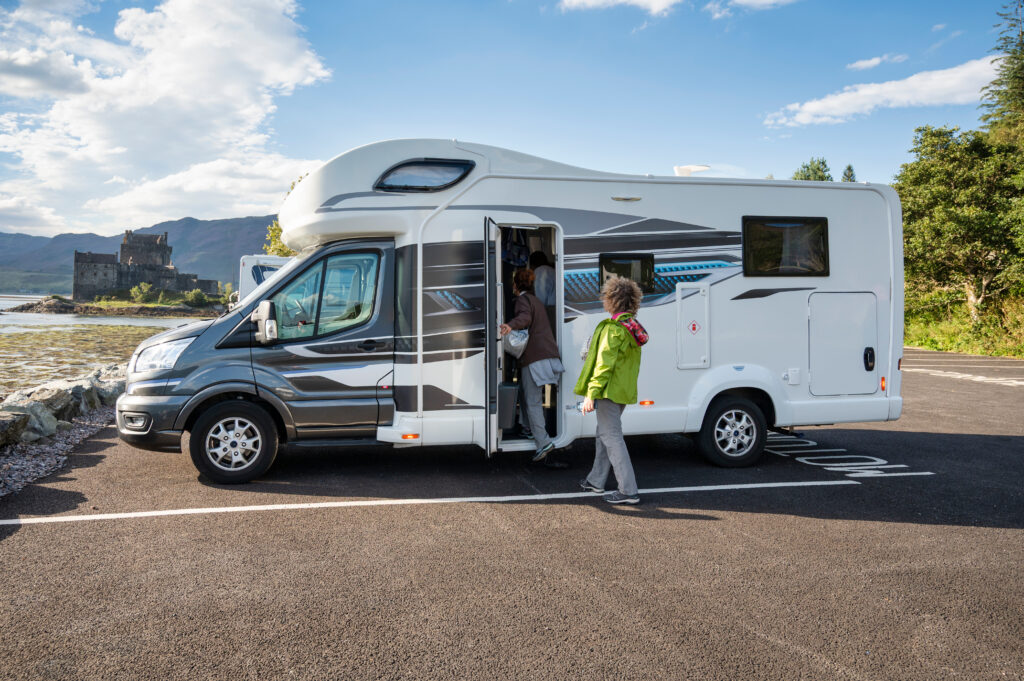
Image source: C&A – Adobe Stock
Do Motorhome and Campervan Travellers Have to Pay?
For motorhome and campervan travellers, a visitor levy will usually only apply if you are staying on a paid campsite, caravan park or other chargeable overnight pitch in an area where a scheme has been introduced.
Overnight parking areas, such as aires and other locations that do not charge for accommodation, are generally not affected by visitor levies. However, local camping rules and parking restrictions should always be followed.
Which Types of Accommodation Are Affected by Visitor Levies?
Visitor levies generally apply to paid overnight accommodation rather than simply visiting an area.
Depending on the local scheme, this may include:
- Hotels
- Bed and breakfasts
- Guest houses
- Holiday lets and self-catering accommodation
- Holiday parks
- Campsites and caravan parks
- Motorhome and campervan pitches
- Hostels
What Is a Visitor Levy (Tourist Tax)?
A visitor levy, sometimes known as a tourist tax, is a small charge that may be added to paid overnight accommodation in certain destinations. It can apply to stays such as hotels, B&Bs, holiday lets, campsites and caravan parks.
The levy is usually collected by your accommodation provider as part of your booking or stay, before being passed on according to local rules. The amount charged and how it is collected can vary depending on the location.
Money raised through visitor levies are typically used to support tourism and local facilities, this may include:
- Maintaining public spaces,
- Protecting natural landscapes
- Preserving historic attractions
- Funding attractions like local museums and festivals
- Improving local facilities and infrastructure
- Supporting services/projects for the local community and tourists
Visitor levies are not introduced nationwide everywhere. Instead, decisions are usually made at a local or regional level, often following consultation with residents, businesses and tourism organisations. This means charges, rules and start dates can differ depending on where you are travelling, so it is always worth checking before you book.
Source: Sergii Figurnyi – Adobe Stock
Where Are Visitor Levies in Place in the UK?
Visitor levies are still relatively new in the UK. Rather than introducing one nationwide charge, Scotland and Wales allow individual councils to decide whether a levy is right for their area. Unlike some European countries where tourist taxes apply nationwide, visitor levies in the UK are decided locally, allowing councils to consider the needs of their own communities, destinations and tourism industries.
In Scotland, Edinburgh has been the first council to introduce a visitor levy, with its scheme beginning in July 2026. Other Scottish councils, including Glasgow, Aberdeen, Stirling, and West Dunbartonshire, have also approved visitor levy schemes that are expected to come into effect from 2027. A number of other councils are continuing to explore whether a levy would be suitable for their area.
In Wales, local authorities will have the ability to introduce visitor levies from 2027. However, each council must first consult with residents, accommodation providers and tourism businesses before deciding whether to bring in a scheme. Cardiff has confirmed plans to introduce a visitor levy from 1st April 2027, with other councils to consider their options.
Why Have Scotland and Wales Introduced a Visitor Levy?
Visitor levies are designed to help destinations manage the costs that come with welcoming visitors, while investing in the places people enjoy exploring.
Money raised can help improve local infrastructure, maintain public spaces, protect natural landscapes, support tourism facilities, enhance cultural attractions and improve services that benefit both visitors and local communities.
Supporters of visitor levies argue that they allow visitors to contribute towards maintaining the destinations they enjoy, while some concerns have been raised that extra accommodation costs could affect travel decisions. As a result, local authorities typically consult with residents, businesses and tourism organisations before deciding whether to introduce a visitor levy.
Who Has to Pay the Visitor Levy?
In most cases, anyone paying to stay overnight in eligible accommodation will need to pay the visitor levy, regardless of whether they are travelling from elsewhere in the UK or overseas.
The levy is usually collected by your accommodation provider as part of your booking or stay before being passed on in line with the local scheme.
Frequently Asked Questions on UK Levies
Are There Exemptions?
Some local visitor levy schemes may include exemptions or refunds for certain groups, such as people experiencing homelessness, those fleeing domestic abuse, carers with disabled visitors, and people in receipt of qualifying benefits. As these exemptions vary between local authorities, it is always worth checking the rules that apply to your destination before you travel.
Is a Tourist Tax Being Brought to England?
Between November 2025 and February 2026, the government held a consultation to discuss introducing a Visitors levy in England. The outcome of the consultation was published on the 10th of September sharing that the government has confirmed plans to introduce a new Overnight Visitor Levy in England for overnight stays in paid accommodation. Key decisions that were made include:
- Authorities (MSAs & FSAs) will have the power to introduce a visitor levy.
- Like Scotland, the levy will be charged as a percentage of the accommodation cost, not as a flat fee.
- Authorities must consult locally before introducing a levy and publish details of how revenues will be spent.
The government expects to legislate the levy during the current Parliament, so subject to legislation local authorities could begin developing investment plans funded by tourist levies from March 2028 onwards.
Will the Levy Affect Food and Drink prices at Accommodation?
Only the accommodation element of stays is subject to the levy. Costs associated with meals, drinks, entertainment, transport or any other non-accommodation package elements or services are not subject to the levy.
Are Children Charged the Levy?
In Cardiff Wales, the rate of 75p per night levy that applies for shared rooms in hostels, bunkhouses, bothies or dormitories, and pitches for tents, does not apply to children under the age of 18 years old. However, for other accommodation such as hotels, B&Bs, self-catering accommodation, etc, a £1.30 levy still applies for under 18s.
In Scotland, whether under 18s are subject to the visitor levy is dependent on the specific rules set by each local councils, so you will need to check the exemption scheme of the area you visit.
What happens if I cancel my booking?
If you have paid the visitor levy but have to cancel your trip, your accommodation provider will need to refund your levy payment.
Ready to hit the road? Let us help protect your journey
Planning ahead can help you make the most of your motorhome or campervan adventures. By checking any visitor levy requirements before you travel and having the right cover in place, you can enjoy your trip with greater peace of mind.
At Comfort Insurance, we specialise in motorhome and campervan insurance designed around your needs. As the No.1 rated Motorhome Insurance company on Trustpilot in the UK, you can trust that we’ll provide you specialist cover and dedicated support whenever you need it so you can travel with confidence knowing you’re in safe hands.
Get a quote online today or call our friendly team on 0208 984 0666 and discover why thousands of motorhome owners trust us to protect their adventures.